Bitrust Custody
Bitrust Custody began as a project within Mercado Bitcoin to give large investors and institutions a straightforward way to store cryptocurrency without wrestling with private keys or complex backups. Instead of asking customers to become security experts, the platform handles everything.
The Challange
In Brazil, dedicated custody services for crypto were virtually unheard of. Investors already felt comfortable leaving coins on an exchange or in a personal wallet, but handing their assets to a separate custodian felt foreign and risky. Our challenge was twofold: first, we needed to explain how advanced safeguards like multi‐party computation and hardware security modules work; second, we had to design every interaction so it felt transparent and approachable, without overwhelming users with technical jargon.
My role
Leading the design effort, I worked side by side with our product managers. Together, we defined research questions, then arranged interviews with some enterprise stakeholders. As the sole product designer, I translated those conversations into user flows, wireframes and a visual language that felt calm and clear. Throughout development, I collaborated closely with engineers to ensure what we designed was technically feasible, and I maintained a shared component library so the growing product remained consistent.
Design Decisions
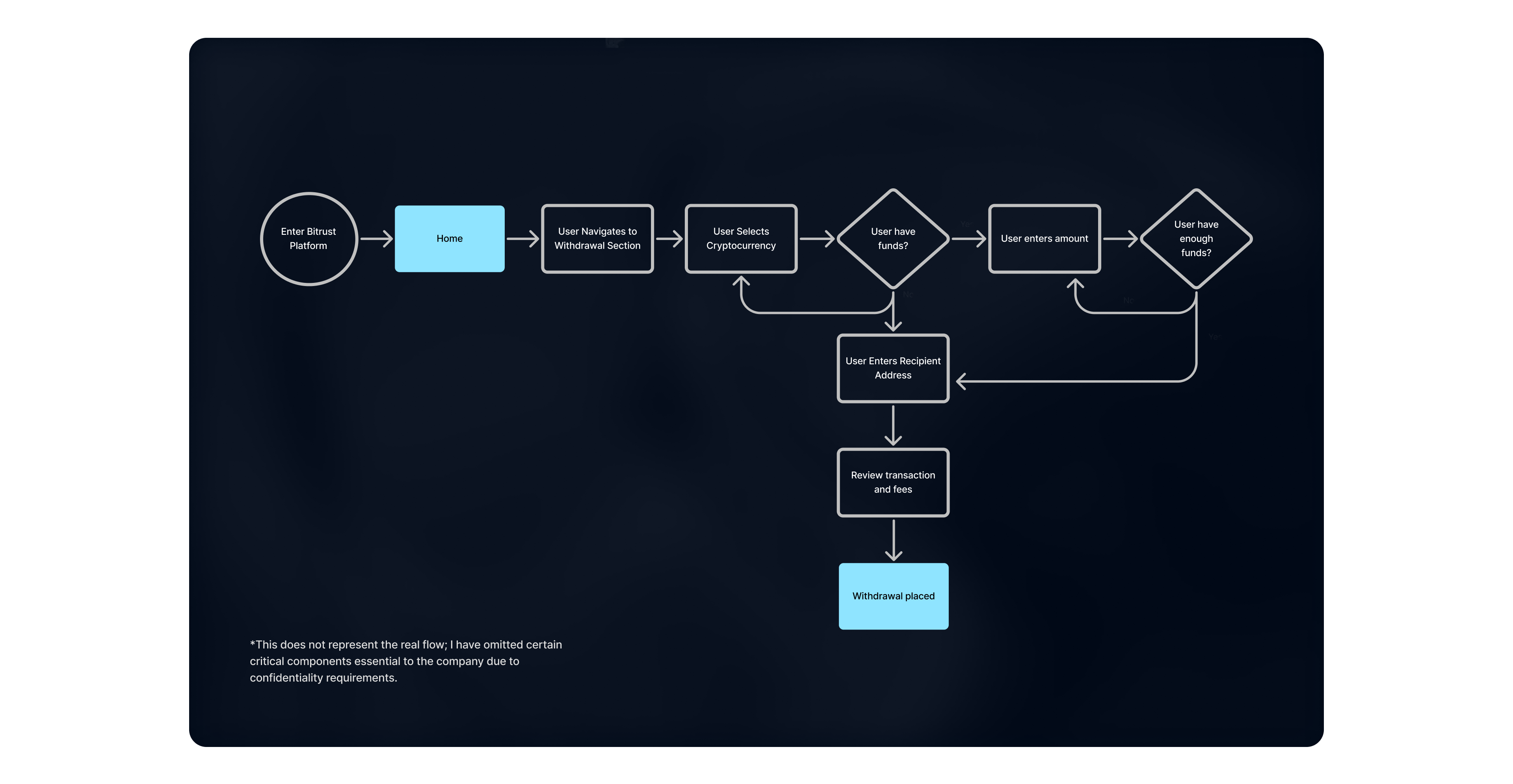
From the previous research insights, we set three clear priorities. First, in contrast to traditional exchange platforms that emphasize speed and quick transactions, we adopted a more deliberate, cautious methodology, acknowledging the high stakes of hacking, phishing, and lost keys, to minimize mistakes and maximize security.
Second, real-time transaction status updates and a comprehensive audit log became the heart of the interface, so clients always know exactly where a transfer stands and who has signed off at each stage.
Third, we streamlined approvals: a user kicks off a transfer request, designated approvers receive platform and email alerts, and every decision is automatically captured in the audit trail.
Key Screens
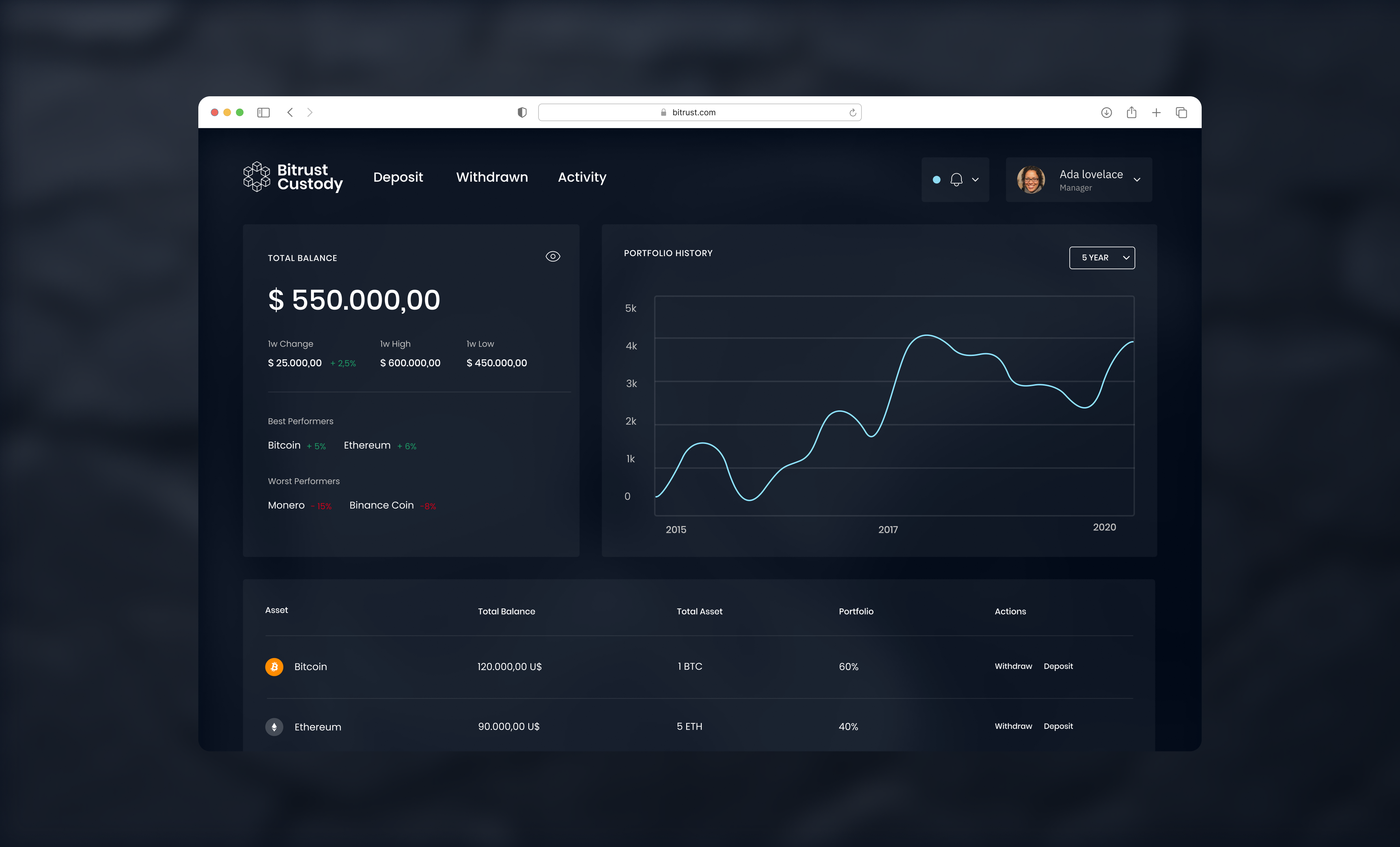
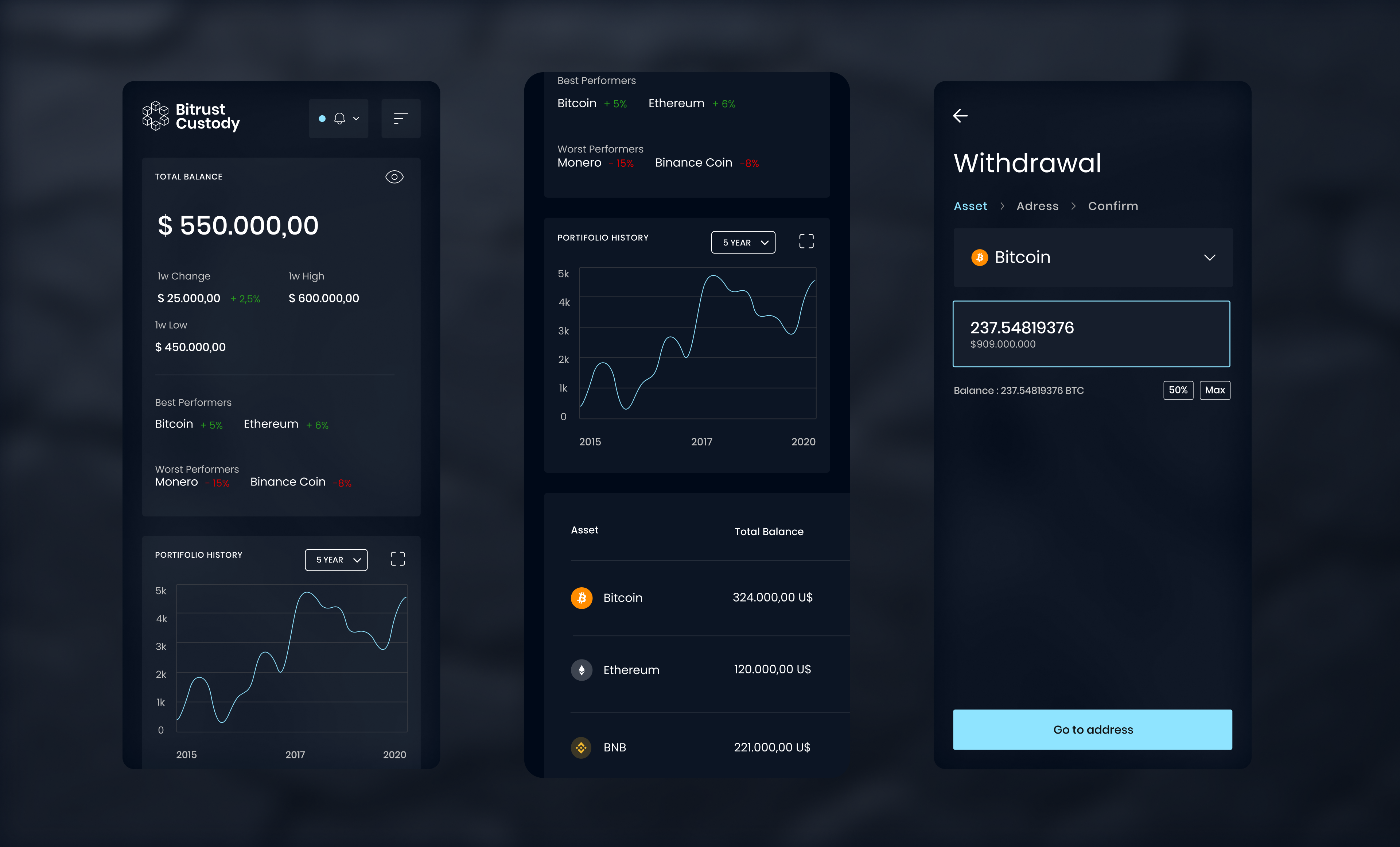
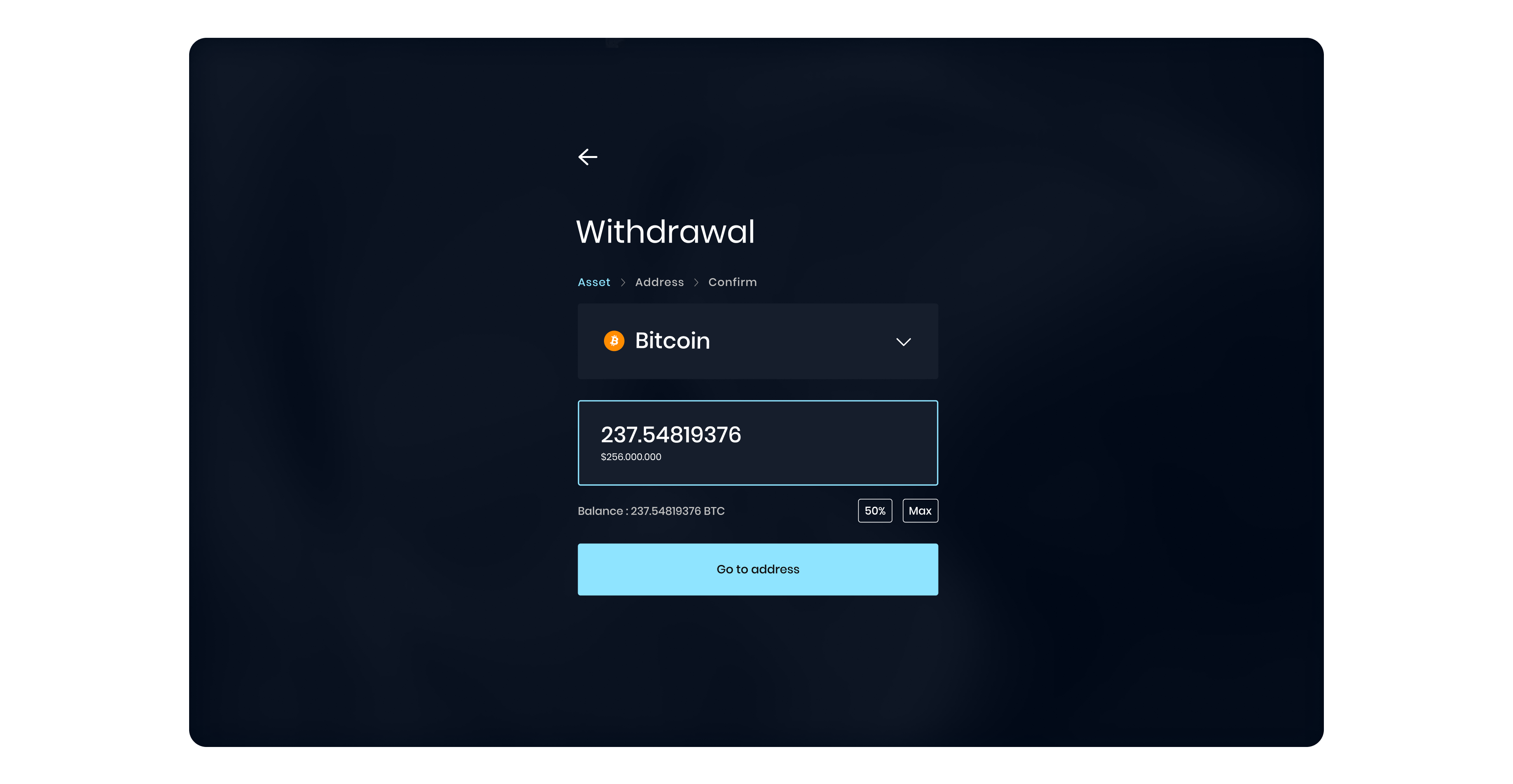
Inside the main dashboard, clients immediately see their total assets broken down by coin. When a withdrawal is needed, the user fills out a simple form specifying amount and destination. As soon as the request is submitted, designated approvers receive both platform and email alerts. Approvers can then sign off or pause the transaction with a single click, and every step is recorded in the live audit trail.
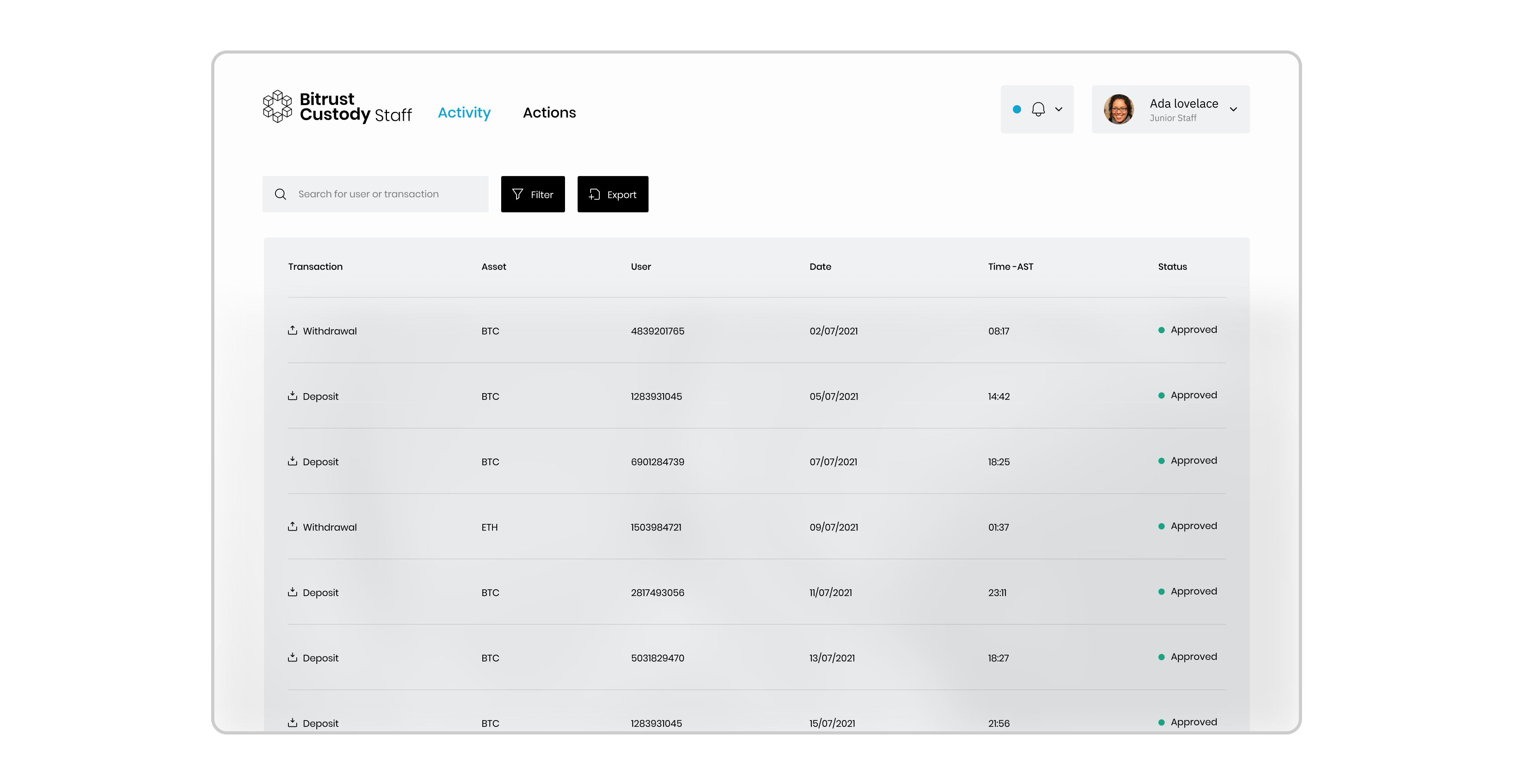
Staff Platform
Behind the scenes, support teams work in a dedicated staff portal built on the same design framework. This internal interface displays a queue of pending withdrawal requests alongside address-change tickets and policy‐setting controls. Junior staff see only the items they need to process, while senior administrators can dive into configuration screens to adjust approval thresholds or update security policies—all without leaving the portal.